Complete Guide to GPS Field Guidance for Farmers
Everything you need to know about GPS guidance — from how it works to what it costs, and whether a phone app can replace a $10,000 system.
Updated March 2026 · 8 min read
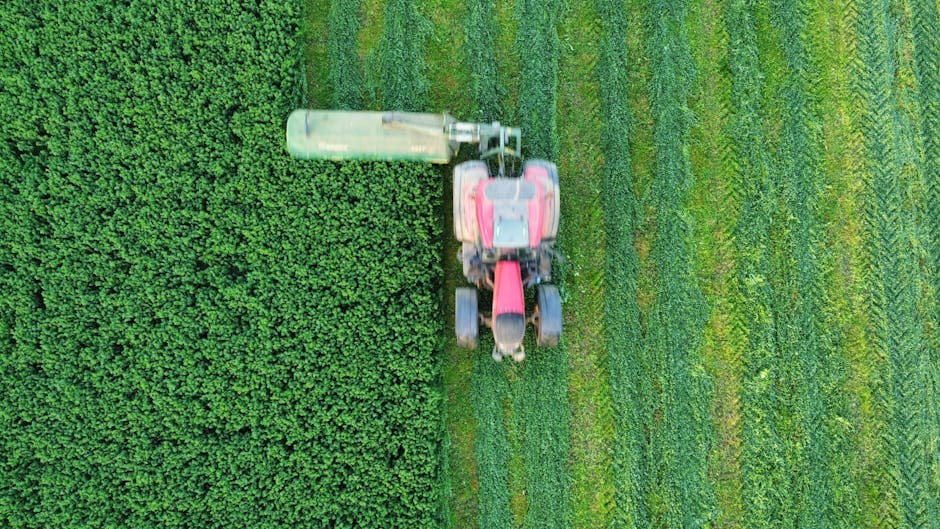
1. What Is GPS Guidance?
GPS guidance is a navigation system that uses satellite signals to track your tractor's position in real time. Instead of eyeballing your passes across a field, a GPS system shows you exactly where you are relative to where you should be — displayed as a visual lightbar or on a screen with a map.
The result: straighter passes, less overlap between rows, and measurable savings on fuel, seed, fertilizer, and chemicals. For large operations, GPS guidance pays for itself within a single season. For smaller farms, affordable phone-based solutions now make it accessible to everyone.
2. How GPS Guidance Works
Every GPS guidance system — whether a $15,000 John Deere display or a $30/year phone app — follows the same basic process:
- Set a reference line. Drive across your field once to establish your first pass. The system records this as your AB line (point A to point B).
- Generate parallel lines. The system calculates parallel offsets based on your implement width (e.g., 12-meter sprayer boom). These become your target lines for every subsequent pass.
- Follow the guidance. As you drive, the system shows your real-time deviation from the nearest target line. A lightbar uses colored LEDs (green = on track, red = off course). Screen-based systems show your tractor on a map with the lines overlaid.
- Adjust in real time. You steer to keep the indicator centered. With auto-steer systems, the tractor adjusts itself.
3. Accuracy Levels Explained
Not all GPS is equally precise. The accuracy you need depends on your operation:
| Level | Accuracy | Best For | Cost |
|---|---|---|---|
| Phone GPS | 3-5 meters | Spraying, broad-acre plowing, seeding | $0-30/year |
| SBAS/WAAS | 30-50 cm | Most field operations | $2,000-5,000 |
| RTK GPS | 1-2 cm | Row crops, strip-till, controlled traffic | $5,000-15,000+ |
| RTK + Auto-Steer | 1-2 cm | High-value crops, precision planting | $10,000-25,000+ |
For most farmers doing broad-acre work — spraying herbicides, plowing, or seeding — phone GPS accuracy (3-5 meters) is more than sufficient. The overlap you eliminate by having any guidance at all far outweighs the difference between 3-meter and 2-centimeter accuracy.
4. Lightbar vs Auto-Steer
These are the two main types of GPS guidance, and they serve different needs:
Lightbar Guidance
- Visual indicator shows deviation
- You steer manually
- Works on any tractor
- $30/year (phone app) to $2,000 (hardware)
- Great for 80% of farm operations
Auto-Steer
- System steers the tractor for you
- Hands-free operation
- Requires hydraulic/motor integration
- $5,000-15,000+ installation
- Best for high-value, precision work
Most farmers start with lightbar guidance and upgrade to auto-steer only when the ROI justifies the investment — typically at 500+ acres or for high-value row crops where every centimeter matters.
5. Understanding AB Lines
The AB line is the foundation of GPS guidance. Here's how it works:
- Point A: Press a button at the start of your first pass.
- Point B: Press again at the end of that pass.
- Parallel lines: The system generates lines parallel to your AB line, spaced by your implement width (e.g., every 12 meters for a 12m boom).
- Curved lines: Some systems also support curve guidance — they record the shape of your first pass and generate parallel curves, useful for contour farming on hillsides.
In FieldMate, you tap A+ to mark your first point, drive to the end, and the app automatically generates guidance lines based on your implement width. The lightbar shows your real-time deviation as you follow each line.
6. Phone Apps vs Dedicated Hardware
The biggest change in precision agriculture in the last 5 years is this: your iPhone already has a GPS chip. That means you can get functional tractor guidance for $30/year instead of $10,000.
| Feature | Phone App | Dedicated Hardware |
|---|---|---|
| Cost | $0-30/year | $2,000-25,000+ |
| Accuracy | 3-5 meters | 30cm - 2cm |
| Lightbar | Digital on screen | Physical LED bar |
| Auto-steer | No | Yes (with motors) |
| Installation | Download app | Professional install |
| Portability | Use on any tractor | Fixed to one machine |
| Updates | Automatic | May require dealer visit |
For farmers who don't need centimeter precision, a phone app like FieldMate gives you 80% of the benefit at 1% of the cost. It's especially valuable if you operate multiple tractors — one app works on all of them.
7. Getting Started with GPS Guidance
Here's the simplest way to start using GPS guidance today:
- Download FieldMate on your iPhone. It's free to try for 3 days.
- Mount your phone on the tractor dashboard or windshield with a sturdy mount.
- Select your operation (spraying, plowing, seeding, or harvesting) and set your implement width.
- Drive your first pass and tap A+ to set your guidance line.
- Follow the lightbar on subsequent passes — green means on track.
Most farmers see immediate improvement in their pass-to-pass consistency, even with phone-level GPS accuracy. The key savings come from eliminating overlap — less wasted fuel, chemicals, and seed.
Try GPS Guidance on Your iPhone
FieldMate gives you a digital lightbar, parallel guidance lines, real-time area tracking, and Apple Watch support — all for $29.99/year. Start with a 3-day free trial.
Download FieldMate FreeFrequently Asked Questions
What is GPS guidance for tractors?
GPS guidance uses satellite positioning to show you exactly where your tractor is in the field. A lightbar or screen display tells you how far you are from your target line, so every pass is straight and evenly spaced — reducing overlap, saving fuel, and covering more ground per hour.
How accurate is phone GPS vs RTK?
Phone GPS (like iPhone) provides 3-5 meter accuracy, enough for most spraying, plowing, and seeding. RTK GPS achieves 1-2 cm accuracy but costs $5,000-$15,000+ for the hardware.
What is an AB line?
An AB line is a straight reference line between two points (A and B) that you set in your field. The GPS system generates parallel lines offset by your implement width, so every pass lines up perfectly with the last one.
Do I need internet for GPS guidance?
No. GPS works via satellites directly — no cell signal or WiFi needed. Map tiles may need to load with signal initially, but tracking and guidance work fully offline.
Can I use my iPhone as a tractor GPS?
Yes. Apps like FieldMate turn your iPhone into a GPS guidance system with a digital lightbar, parallel lines, and real-time tracking — for a fraction of the cost of dedicated hardware.
What is the difference between lightbar and auto-steer?
A lightbar shows you visually how far off-line you are — you still steer manually. Auto-steer physically controls your steering wheel to follow the line automatically. Lightbar costs $30-2,000; auto-steer costs $5,000-15,000+.