How to Reduce Overlap When Spraying & Plowing
Overlap wastes fuel, chemicals, and time. Here's how GPS guidance lines eliminate it — with real numbers on what you save.
Updated March 2026 · 7 min read
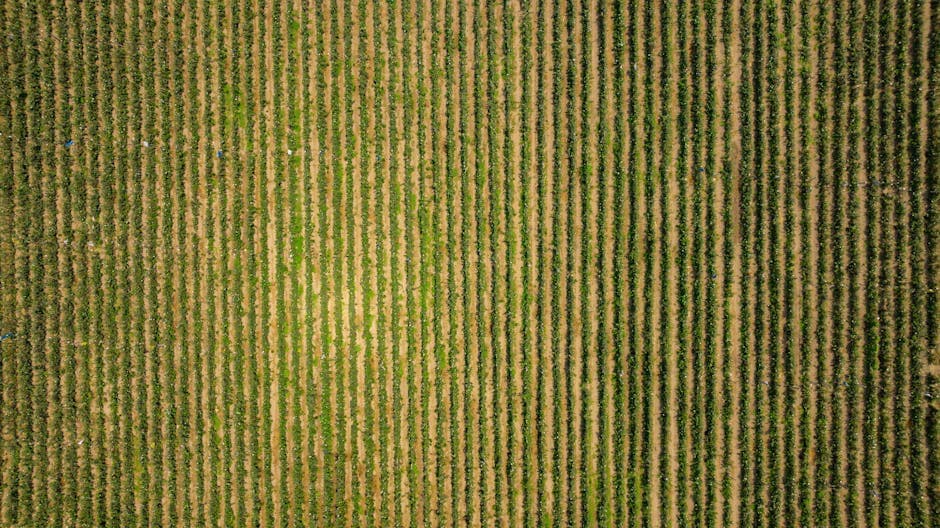
Every time you overlap a pass, you're paying twice — double the fuel, double the chemicals, double the seed on that strip. On a 500-acre farm, even 10% overlap wastes thousands of dollars per season. The fix is straightforward: GPS guidance lines that keep every pass evenly spaced.
The Real Cost of Overlap
Most farmers underestimate how much overlap costs them. Without GPS guidance, the average operator overlaps 10-15% of the field on every pass. Here's what that looks like in dollars:
| Operation | Cost/Acre | 500 Acres @ 10% Overlap | Season Total* |
|---|---|---|---|
| Herbicide spraying | $12-20/acre | $600-1,000 wasted | $1,800-3,000 |
| Fertilizer application | $20-40/acre | $1,000-2,000 wasted | $2,000-4,000 |
| Seeding | $15-50/acre | $750-2,500 wasted | $750-2,500 |
| Fuel (all operations) | $3-8/acre | $150-400 wasted | $600-1,600 |
*Assuming 3 spray applications + 1 fertilizer + 1 seeding + 4 pass operations per season
For a 500-acre operation, overlap can easily waste $5,000-10,000 per season in combined inputs and fuel. A $30/year phone app that reduces overlap by even half saves thousands.
Why Overlap Happens
- No visual reference: In large, open fields, there's nothing to align to. Foam markers help but fade quickly and miss spots.
- Operator fatigue: After 8 hours in the cab, concentration drops. Passes drift wider or narrower without the operator noticing.
- Irregular field shapes: Triangular fields, curved boundaries, and obstacles force non-parallel passes that create wedge-shaped overlaps.
- Wind and terrain: Side slopes push the tractor laterally. Wind affects spray patterns and makes visual alignment harder.
- Intentional overlap: Many operators overlap 10-20% on purpose to avoid skipping strips — a valid concern that GPS guidance solves by showing exactly where you've been.
How GPS Guidance Eliminates Overlap
GPS guidance works by giving you a precise visual reference for every pass. Instead of guessing where your last pass was, you follow a line on a screen (or a lightbar) that's exactly one implement width from the previous pass.
Without GPS
- 10-15% average overlap
- Skipped strips in dusty conditions
- Operator fatigue increases overlap over time
- No record of where you've been
- Double-sprayed strips damage crops
With GPS Guidance
- 2-5% overlap (phone) / under 2% (RTK)
- Visual line keeps every pass aligned
- Consistent accuracy regardless of fatigue
- Map shows covered area in real time
- Even application = healthier crops
7 Tips to Minimize Overlap
- Use GPS guidance — even a phone app. Any guidance is better than none. A $30/year app reduces overlap more than a $2,000 foam marker system.
- Set your implement width accurately. Measure your actual working width, not the nominal width. A 90-foot boom that only sprays 88 feet creates skips if you set 90.
- Use AB lines aligned with your field's longest edge. This minimizes the number of turns and reduces overlap at headlands.
- Slow down at headlands. Most overlap happens during turns. Reducing speed at the ends gives you time to align with the next guidance line before starting the pass.
- Use curve guidance on contour fields. Straight AB lines on sloped fields create increasing overlap and gaps at the edges. Curve guidance follows the terrain.
- Track your covered area.Real-time area tracking shows exactly where you've been. Apps like FieldMate color-code your tracked passes on the map so you can see gaps instantly.
- Accept 2-3% overlap intentionally.Perfect zero overlap risks skips. Set your guidance lines 2-3% narrower than your implement width for a small, consistent overlap that's better than random skips.
Overlap and Spraying: Why It Matters Most
Overlap is most costly during spraying because:
- Crop damage: Double-sprayed strips receive twice the herbicide dose, which can burn or kill crops — especially at high rates.
- Chemical cost: Herbicides and fungicides are expensive. At $15/acre, 10% overlap on 500 acres wastes $750 per application.
- Environmental impact: Excess chemicals run off into waterways. Reducing overlap is both economic and environmental common sense.
- Resistance: Over-application accelerates herbicide resistance, creating long-term problems that cost far more than the wasted chemical.
For spraying operations, GPS guidance isn't a luxury — it's a basic cost management tool. Even phone-level GPS accuracy (3-5 meters) cuts overlap in half compared to visual estimation.
Calculate Your Savings
Use these tools to estimate how much overlap is costing your operation:
Acres Per Hour Calculator
See how much faster you can cover ground with less overlap
Spray Rate Calculator
Calculate your exact chemical cost per acre to see overlap waste
Field Area Calculator
Measure your field size to estimate total overlap area
Seed Rate Calculator
Calculate seed cost per acre to see seeding overlap waste
Stop Wasting Inputs on Overlap
FieldMate shows your real-time position on guidance lines so every pass is evenly spaced. Color-coded track strips on the map show exactly where you've been — no more double-spraying or missed strips.
Try FieldMate Free — 3-Day TrialFrequently Asked Questions
How much overlap is normal without GPS?
Without GPS guidance, most operators overlap 10-15% of their field. On irregular-shaped fields, overlap can reach 20-30%. Even experienced operators overlap 5-8% when eyeballing passes.
How much money does overlap waste?
On a 500-acre spraying operation at $15/acre for chemicals, 10% overlap wastes $750 per application. Over a 4-spray season, that's $3,000 — more than enough to pay for GPS guidance many times over.
Does GPS completely eliminate overlap?
No system eliminates overlap entirely. RTK auto-steer can reduce it to under 2%. Phone-based lightbar guidance typically reduces overlap to 3-8%, depending on the operator. Any reduction from the no-GPS baseline of 10-15% is significant.
Is overlap worse with certain operations?
Spraying is most sensitive — double-sprayed strips get double the chemical dose, which can damage crops. Seeding overlap wastes expensive seed and creates uneven stands. Plowing overlap wastes fuel but causes less crop damage.
What implement width should I set for guidance?
Set your guidance line spacing to match your implement's working width. For a 90-foot sprayer boom, set 90 feet. Some operators reduce by 5-10% for intentional slight overlap to avoid skips, especially in windy conditions.
Can I reduce overlap on irregularly shaped fields?
Yes. Use contour/curve guidance for fields that follow terrain contours. For headland management, many GPS systems let you mark field boundaries and optimize your pass pattern for minimum overlap.